
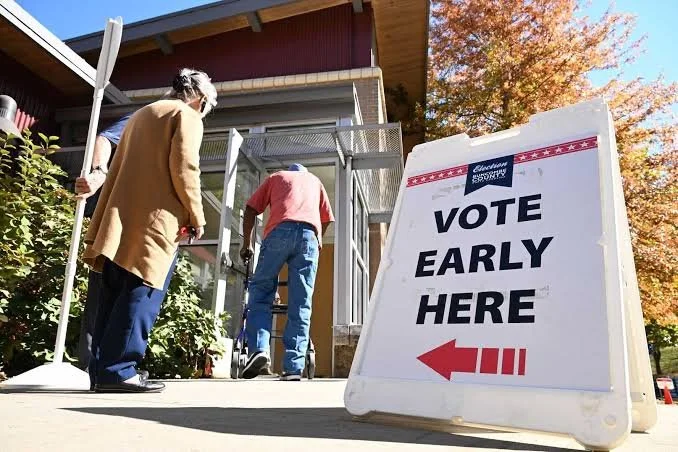
With the 2026 midterm elections complete, there's another kind of uncertainty we're hearing more about: How much does the election impact the timing for buying and selling my home?
It's a reasonable question.
Elections can create uncertainty around taxes, economic policy, jobs, consumer confidence, and even mortgage interest rates. And when people feel uncertain about what's ahead, they sometimes delay big financial decisions—including buying or selling a home.
But does an election actually change the real estate market?
The answer is more nuanced than you might think.
Elections Can Create a “Wait and See” Mentality
Real estate is heavily influenced by confidence.
Buying a home is one of the largest financial decisions most people make, so when there's uncertainty around the economy or political environment, some buyers naturally become more cautious.
Research has found evidence that increased political uncertainty around elections can temporarily reduce housing transactions and mortgage activity.
That doesn't necessarily mean home values suddenly plummet during an election.
Sometimes, it simply means buyers and sellers decide to wait until they have more clarity.
And in a housing market that's already moving more slowly, even a relatively small change in buyer confidence can be noticeable.
But Elections Aren't Usually the Biggest Factor
This is where homeowners should be careful about giving an election too much weight.
An election doesn't happen in isolation.
Mortgage rates, employment, affordability, housing inventory, consumer confidence, and the overall economy are all influencing buyers at the same time.
That's especially important in the current market, where affordability and borrowing costs are already affecting how much buyers can comfortably spend.
So if you're thinking about selling your home, the better question may not be:
“Should I wait until after the election?”
It may be:
“What are buyers in my specific market doing right now?”
Real Estate Is Local—Especially in Western North Carolina
National housing headlines can make it sound like there's one American real estate market.
There isn't.
What's happening with a condo in Downtown Asheville can look very different from what's happening with acreage in Leicester, a home in Black Mountain, an investment property, or a higher-end property elsewhere in Western North Carolina.
That's why we pay attention to the numbers closest to your property:
Recent comparable sales
Current competing listings
Inventory
Days on market
Price reductions
Buyer activity
Mortgage rates and affordability
How homes at your specific price point are performing
Those factors can tell us much more about your likelihood of selling than simply knowing an election is approaching.
Pricing Matters Even More When Buyers Are Cautious
When buyers are uncertain, they tend to be more selective.
They have more time to compare properties, look closely at pricing, and decide whether a home represents good value.
That means sellers have less room to test an unrealistic price and hope buyers negotiate them down later.
The first few weeks on the market matter. Starting too high can mean fewer showings, fewer offers, and eventually a price reduction after some of your strongest initial exposure has already passed.
If you're considering pricing higher to leave yourself room to negotiate, read our guide on Should We Price Our Home Higher So We Have Room to Negotiate Later?
The goal isn't simply to get your home listed.
It's to position it correctly for the market you're actually selling in.
What We're Watching in the Asheville Housing Market
Instead of trying to predict what an election will do to real estate, we're paying attention to what buyers are showing us right now.
Are homes taking longer to sell?
Are sellers making more price reductions?
How much inventory does a buyer have to choose from?
What price ranges are seeing the most activity?
Are buyers making offers quickly, or are they taking their time?
These are the kinds of questions that help us determine how aggressive—or cautious—a seller needs to be.
Political uncertainty may influence sentiment, but it is only one part of a much larger picture.
Should You Wait Until After the Election to Sell?
Not necessarily.
If you're relocating, downsizing, moving closer to family, buying another home, or making another major life change, trying to perfectly time an election may not be particularly useful.
There's another factor that's easy to overlook: seasonality.
Election Day falls in November, which is already part of a season when real estate activity typically slows compared with spring and summer.
That makes it easy to see slower activity around an election and assume politics caused all of it, when some of what we're seeing may simply be normal seasonal behavior.
Instead of trying to predict exactly what happens after Election Day, we'd rather build a strategy around information we can actually measure.
What are comparable homes selling for?
How long are they taking to sell?
How many competing listings are there?
What are buyers responding to?
And what would your financial outcome look like if you sold now versus waiting?
Those are questions we can actually analyze.
Prepare for the Market You Have—Not the Market You Hope For
You can't control an election.
You can't control mortgage rates.
And you can't control what happens with the broader economy.
But as a seller, there are things you can control.
You can control how your home is prepared, how it's presented, how it's marketed, and—most importantly—how it's positioned against the competition.
If selling is something you're considering over the next several months, preparation can start well before your home actually hits the market.
Our Asheville Seller Guide walks through what to consider before listing and how we approach preparing, pricing, and marketing a home in today's market.
Don't Let Headlines Make Your Real Estate Decisions
Political cycles can influence consumer confidence and create periods of uncertainty.
But elections are only one of many forces affecting real estate.
Mortgage rates matter.
Employment matters.
Inventory matters.
Affordability matters.
And in Asheville and Western North Carolina, your specific property and your local market matter enormously.
So whether you're considering selling before the election, immediately afterward, or sometime next year, don't make the decision based solely on a headline.
Look at the numbers.
Understand your options.
Then make the decision that makes sense for your situation.
At Bloom Realty, that's how we approach uncertain markets: confidence through clarity.
Thinking about selling your Asheville or Western North Carolina home?
Download our Asheville Seller Guide to learn how we prepare, price, and market homes in today’s market. Or, if you’d rather talk through your specific situation, book a strategy call with us to discuss your goals, timeline, and next steps.
